
 Instructing the Super Fund to channel $300 million of investment into emerging tech firms, as well as a recent call for delivery of a “deep tech” incubator to assist commercialisation of public funded research in New Zealand, illustrates that the government has been listening to the concerns of the high tech business community around the need for greater support in the commercialisation of knowledge. Health, environment, food production, robotics and AI – there are many problem areas in which we can excel. But whilst a broadening of activity in the innovation ecosystem must be seen in a positive light, new entrants may face an uphill battle.
Some say that government involvement in the sector is long overdue. Not a month goes by without the media reporting the departure of a promising high growth, high tech firm such as Rocket Lab, for example. The paucity of follow on capital and expertise available locally is often quoted as the culprit. Successive previous governments failed to address the problem due to being ideologically opposed to what has sometimes been unfairly branded as corporate welfare. But interestingly the most vocal critics of incubation and government directed investment funding tend to be wealthy and well-connected individuals who have no problem sourcing capital for their own ventures.
Since the public purse is already funding universities and research organisations in one form or another anyway, is it really such a stretch for government to facilitate obtaining an economic return on those investments? Those who mutter in their beards about “level playing fields” should take a look around. We are losing the battle with our neighbours in the Asia-Pacific region with whom we compete for capital and talent. Australia, Singapore and Korea all provide substantial support for startups and the commercialisation of publicly funded research.
So where does that leave New Zealand with its newly rediscovered enthusiasm for investing in science and technology commercialisation? Well there was an additional most welcome announcement this week of new funding for an existing body that has already made considerable inroads into surfacing promising research and turning it into businesses. That seems to foreshadow where government thinking might be heading in terms of who is now best equipped to develop a formal incubation programme.
But research commercialisation is actually a network optimisation problem involving many and diverse stakeholders. A post graduate study that I conducted on this topic a few years ago is still relevant. The most creative ideas and opportunities are found at the boundaries where disparate networks overlap. Hence the direction we are heading with, GeniusNet. It is therefore absolutely essential that we have an open innovation based ecosystem and a diversity of players in the incubation and commercialisation marketplace, if we are to lift our economy up the value chain.
Paul Spence is a commentator and serial entrepreneur, a co-founder of New Zealand based technology ventures iwantmyname and Creative Forest and principal at GeniusNet Research. You can follow Paul on Twitter @GeniusNet or sign up for a free weekly digest of startup, tech and innovation related events curated by him through New Zealand Startup Digest.
 Let me begin by stating that I like Wellington Mayor Justin Lester as a person. He’s way more approachable than the previous two incumbents and I respect that he is doing his best to navigate the council through a very difficult patch in the city’s long history. He’s been a business owner in the Capital and will be acutely aware of the many challenges confronting the inner city right now. So when he
  Having
 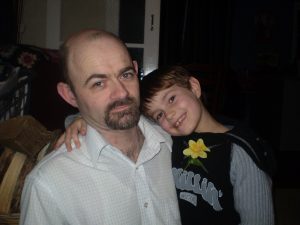 This week I gave my young son a tearful hug and watched him cross through airport security to join the first leg of a long journey to Europe. I found myself, reviewing the previous eighteen years and wondering whether or not I had done enough for him. His mother and I have a solid friendship now, but we separated when he was just two. So co-parenting presented numerous challenges for us for many years. Not the least of those was that (despite his intelligence) my son sometimes struggled within the school system. At times it broke my heart and I often felt like I badly let him down. But what I have found out since we began researching our new project
  After three weeks holiday travel, incorporating some of the leading historical and business centres of Europe, it has been quite an adjustment settling back into daily life in the sleepy province of Wairarapa where gumboots and track pants are regarded as the height of fashion in some circles and the main export is unprocessed timber. New Zealand offers many lifestyle benefits, but it is very evident that our cultural isolation threatens to obscure opportunities, unless we learn to take a wider view.
 The environment and human development seem to be increasingly at odds. Having
 Australian Prime Minister Turnbull’s recent flying visit to New Zealand, to meet our new PM Bill English, was a considerably more civil affair than Turnbull’s reportedly heated conversation with the “so called” U.S. President the previous week. Perhaps that is why the visit went under-reported in the media. Neither Prime Minister could be regarded as a stellar charismatic, but perhaps that’s not such a bad thing. In these unenlightened times, a safe pair of hands with good diplomatic skills and a head for business is a far greater asset. Strengthening regional economic linkages will be key to survival in an uncertain world.