
 The number of pandemic “experts” seems to be growing by the day. Now with a former Prime Minister wading into the murk, it has opened the floodgates allowing a wave of discontent to infect the nation. But actively demonstrating a partnership approach with business could deliver better outcomes and bring some smart minds to bear on the gnarly problems that confront us.
In recent weeks a number of prominent New Zealanders have been expressing their impatience with the government’s approach to managing the pandemic crisis. Curiously the concern is not so much about the travails of extended lockdowns, but more to do with the impact of travel restrictions as a throttle on economic growth. Unsurprisingly, most of the complainants are absorbed with their own particular business predicaments. But rather than be labelled “whingers” (to their credit) some creative solutions have been proposed by them.
In 2020 our government urgently cobbled together an interim response to keep us safe. Controlling foreign arrivals, managing quarantine and rolling out the largest vaccination programme in our nation’s history have been huge, imperfect undertakings delivered under extraordinary and rapidly evolving circumstances. Without these initiatives, I am absolutely certain that several vulnerable members of my immediate family would not have made it through the last 18 months.
One only needs to look at the data from offshore to understand the dire situation we find ourselves in. But perhaps the most telling data point is that investing in snuffing out the virus does indeed result in a quicker and stronger economic rebound, at least in the medium term. Placing our trust in a benevolent State has paid off so far, but patience is waning as purveyors of a wide variety of grievances across the political spectrum become ever more vocal. So openly demonstrating a willingness to have business as part of the conversation would be reassuring to the public, whilst bringing a greater diversity of thinking to the top table. None of this should obviate the need to carefully balance social and economic considerations, of course.
Putting aside the fact that I find sports analogies rather tedious, some of the ideas for getting New Zealand business moving again have actually been good ones. We have a wealth of technical and management expertise in our business community and there are homemade solutions available for improving almost every aspect of the crisis response. I believe where the difficulty lies is that there is a public perception at least of a lack of engagement between government and business. That may not be entirely fair, but in politics perception matters.
Early in the crisis, the government appointed former Air New Zealand CEO Rob Fyfe as a liaison person between the government and business. That was a good move, but very little has been heard since. The Cabinet wisely considers advice from the pandemic technical advisory group who are respected clinicians and academics. But from time to time self appointed media darlings from scientific fields outside of epidemiology have an annoying habit of confusing the public by contradicting the actual expert viewpoints. So we have to be discerning about where we get information. Similarly we should not simply cave in to loud voices from the business sector who manage to get their views published.
Preserving life is paramount. But at present, it’s not clear what the exit strategy will be. There is a strong sense that the business community has not been fully enrolled as a partner in this process. I might add that this includes a wholesale failure to engage the talent sitting in our research institutions and technology incubators. What is clear however is that we will have no choice but to open up again in 2022, because the present approach is economically unsustainable in the long term. Elimination may already be nonviable and everyone (including business) need to deal with the reality of the new normal. The best piece of advice anyone can follow right now – get ready, get vaccinated!
Paul Spence is a commentator and serial entrepreneur, a recently exited co-founder of a New Zealand based technology venture, a co-founder and director of Creative Forest, principal at GeniusNet Research and an advisor at ThincLab. You can follow Paul on Twitter @GeniusNet or sign up for a free weekly digest of startup, tech and innovation related events curated by him through New Zealand Startup Digest.
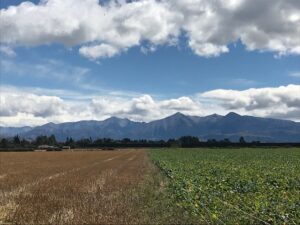
 After nearly a decade of rebuilding, much of the baseline physical infrastructure needed for the regeneration of Christchurch is now in place. There’s still a lot more to do of course, but there’s now some breathing space to think about working on social infrastructure as well. Developing a vibrant and better connected local ecosystem will be the key to unlocking a wider pipeline of innovation across Canterbury.
  What do a vegan Middle Eastern prince and a Singaporean cheese maker have in common? Not a joke. In fact it’s a rather serious question for New Zealand. Earlier this year Saudi based KBW Ventures invested over US $3 million in a “seed” round backing a company that claims to have developed a proprietary technology for producing milk from bovine mammary cells, by hosting the live cells within a laboratory bioreactor. The long term implications of this technology for the New Zealand economy are obvious.
 During the last few months a number of us from the entrepreneur enabler community have been working on a
  The pandemic induced economic crisis has raised awareness that economies remain fragile since the GFC and that we must urgently shift to more sustainable and environmentally sound forms of economic development if we are to survive as a species. As a nation in the spotlight right now, New Zealand has an opportunity to lead with change. But we need a vehicle to drive this process and we must shift the mindset of the nation towards environmental entrepreneurship.
 This year has seen extreme heatwaves in Europe, numerous and more frequent devastating tropical storms across all of the world’s oceans and a record number of destructive bush fires in both Australia and North America. Politicians may not agree on the causes, but there is no doubt that climate change represents a huge risk to economies and quite possibly an existential threat to some nations altogether. But climate change action and reduction of CO2 in the atmosphere may require re-framing as an economic opportunity in order to make progress.